
This is Part Three of a three-part series. You can read part one here and part two here, if you haven’t already. Kate: thanks again, my dear friend, for sharing your story.
***
I kept a foot in the birth world by getting involved in La Leche League (a peer to peer breastfeeding support group), where I’m currently working on the leadership process. I was asked to join a local doula collective to act as a birth and post-partum doula, and I sort of ate midwifery-related information. I’ve learned a lot of relevant skills in the past few years, even though I haven’t been actively working at a degree. However, because the MEP is a professional program, your academic credits expire after five years, and mine expire this year, so I’m now in a position where I have to start again at the beginning of the four year program, or find an alternate method to complete my training.
This April, I returned from Rwanda. My parents have lived there for almost 7 years. I visited in 2007, but my kids had never seen where their grandparents live and the opportunity arose to spend 3.5 months there with them. While we were there, I was gifted with the opportunity to work under a Canadian midwife in a prenatal clinic in one of the “slums” on the outskirts of Kigali. I learned a lot, clinically, but mostly I was surprised to learn that I felt good about leaving my kids to go do this work. I mean, it wasn’t the highlight of the day, but I knew they were ok. *I* was ok. It was a life-changing realization! As is often the case in a development context, half an education is about ten times as much as most people have, so I was doing things waaaaay beyond the scope of practice I would have had in Canada.
One day, we were short staffed and got a called to a birth. The midwife, her second (there are always two midwives at a birth, the idea being that if both mother and baby require care simultaneously, the midwife does not have to choose between them. In reality, this doesn’t happen very often, but two sets of hands, and two minds are always better than one. The second midwife is called a “second”.), and the nurse who was being trained to act as a second left for the birth. This left, at the clinic, one translator, one Rwandese ob/gyn, about 35 clients, two exam rooms, and, well, me. On her way out the door, the midwife looked at me and said, “You can handle an exam room on your own”.
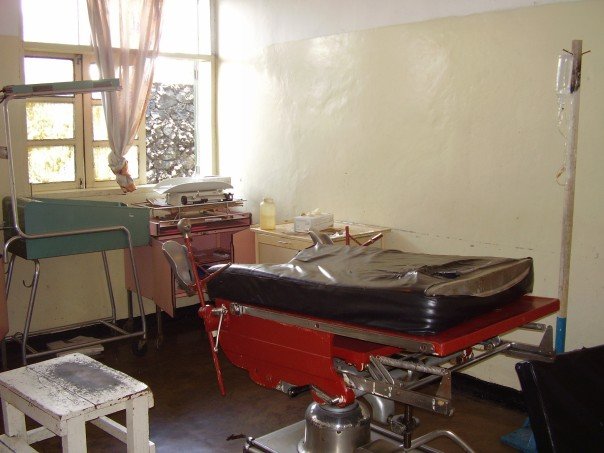
She was so matter of fact and confident, and, perhaps surprisingly, I didn’t really bat an eye. I’m actually really proud of what I did that day. I caught some potentially very serious conditions that were not readily visible. I taught the translator about male/female sperm and menstrual cycles. I found a fetal heart on the first try with a fetoscope! That last one isn’t actually very remarkable, but I seem unusually handicapped with fetoscopes. I always struggle to find heart tones with one, even though I’m really good at palpating to figure out where to listen. Like I said, handicapped. In Rwanda, this skill was both especially necessary (we didn’t always have acces to a doppler) and more difficult (heaps of ambient noise, including drums in the distance!).
The midwife I was working under really encouraged me to go a different route to get the RM (Registered Midwife) designation after my name. She encouraged me to become a CPM (Certified Professional Midwife) by studying for a year in the US, followed by a year’s clinical rotation at a clinic she helped start in the Phillipines. To then practice in Canada requires completing a bridging program (5-9
months). The idea of both a shorter route and a clinical rotation all in one location, and a busy (average of 350 births a week!), fascinating, underserviced location at that, is intensely appealing.
I also learned, during my time at the clinic in Rwanda, that I had erroneously convinced myself that it was fine to put midwifery on the back burner for several years. It’s not fine. I’m a different person when I’m doing birth work. I’m good at it, I’m passionate about it, most importantly, it’s a major part of my self. Without midwifery, I’m missing part of myself, and I actually think I’m a better person, better mother, better partner, when I’m doing this work. Not that I want to, right now, work as a full-time midwife, but I do *need* to finish my education and work in the field.
Thankfully, my husband has come to a place where he now feels comfortable leaving his field for a few years (he used to believe that if he stepped out for awhile, that he’d never be able to get back in), and we both feel much more confident about our ability to manage our family well with an at-home dad. So, leaving our lives open to those occasional radical changes in direction, we’re tentatively planning a southern migration in roughly two years so that I can become a CPM. After that, who knows where we’ll end up! Maybe we’ll stay overseas, or maybe we’ll come back to Canada so I can complete the bridging program and practice here. Maybe by then the Maritimes will have moved out of the dark ages and both legislated and funded midwifery services. A girl can dream.
***
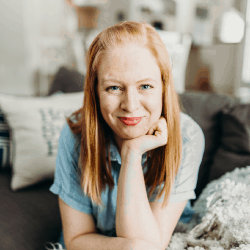
Kate is in the midst of packing up her blue and green house in Saint John, NB for a new adventure in Antigonish, NS (population 4,200, whoo!). She has two wonderful small people in her life, and loves reading, biking, swimming and dancing (badly!).










becoming a doula in ontario
This theme is simply matchless :), it is pleasant to me))) la dona mobile
cate
I just happened upon your blog! What an amazing experience! I agree with the comment above this definitely seems like a perfect fit for you! What a wonderful experience you will have!
mommyrose
That’s awesome Kate. 🙂 Will be praying for you through your midwife journey. Definitely sounds like it is God’s calling on your life!
Krista