
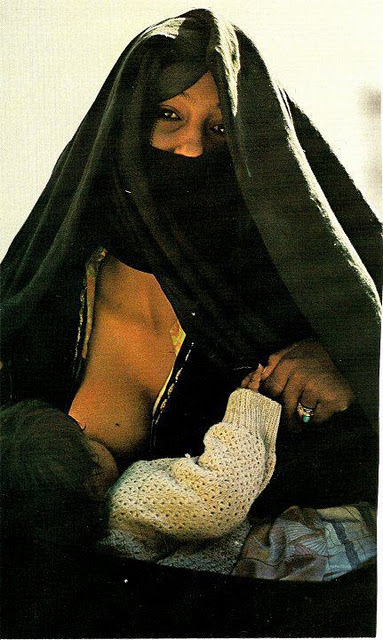
The bolded quotes below are comments that I received (on Facebook) regarding my post “Uninhibited Breastfeeding in Public {Reclaiming My Womanhood from Perversity}“.
“I just find it interesting that both sides worry about the other…let those who want to breastfeed breast feed however cover or no cover and others go on about their biz–people can i please have the time you spend worrying about this –this world is ridiculous –let s just all get along :)”
“We all need to get over ourselves and worry about real problems like world hunger or something.”
Is this just a matter of “live and let live”? Is it true that we should just “let” everyone breastfeed the way they want, covered or uncovered, and just stop “worrying about it”? Is this a shallow and trite conversation not worth having?
I’m going to have to argue that it’s not that simple, and here’s why:
We perpetuate the over-sexualization of breasts by hiding away the natural use for them and attaching shame and discomfort to it, and in doing so we are in fact harming young girls and women.
This is bigger than just a personal rant for wanting to nurse without a cover. It is certainly not “just another mommy war”. It is about our society’s values and cultural lessons, and how we are raising each generation to think about the human body. It is about all of us.
A task force of the American Psychological Association defines sexualization as follows: “when a person’s value comes only from her/his sexual appeal or behavior, to the exclusion of other characteristics, and when a person is sexually objectified, e.g., made into a thing for another’s sexual use.” By attaching shame to the act of uncovered breastfeeding in public, it is an act of sexually objectifying the woman. It is basically saying that she couldn’t possibly have a non-sexual use of her breasts that is natural and appropriate for others to see.
This task force “on the Sexualization of Girls examined research papers covering the effect of all kinds of media content including television, music videos, magazines, video games, the Internet, movies, and music lyrics. They also looked at the way products are sold and advertised to young girls.” (source for the above quote and this one is here).
The findings of the task force were disturbing, but not all that surprising (to me, anyway). “The report suggests that the sexualization of girls impedes the healthy development of a girl or young woman in several different areas. For example by undermining her confidence and making her feel dissatisfied with her body, this can result in negative self-image and lead to feelings of shame and anxiety. Also, a body of evidence now links sexualization with several of the most common mental health problems in young women and girls: eating disorders, low self -esteem and depression. And there is also the increased chance that it will impact a girl’s ability to develop a healthy sexual self-image.”
I can’t really imagine how this is not a “real problem”. The fact is that the only images people in our culture are seeing of breasts are highly sexualized and pornographic in nature, which has been identified as the cause of multiple issues as described above. What better way to combat this issue than to remove the shame and negativity surrounding the act of breastfeeding and let our society see breasts being used in a way that is natural, non-sexual, and incredible (the intricacy of the design of milk production and the science of breastfeeding is quite fascinating and awe-inspiring!).
Our culture needs to see breasts being used in a context other than sexual if this twisted way of thinking is to ever be overcome. Check out this article and this website on how the over-sexualization of breasts is a cultural phenomenon that is hurting young people, men and women, and society as a whole. How many in our culture grow up having ever seen a non-sexualized photo of normal breasts? Breast tissue, nipple, and areola. The website that I just linked has hundreds of non-sexual photos of real, normal breasts, and discusses this very issue. Perhaps med students, in their textbooks, have seen photos of breasts. Doctors and nurses have seen breasts on the bodies of their female patients. Most of the general population, however, have no idea what normal breasts look like, because we have declared them to be obscene. The exception of course is the media’s twisted and demeaning portrayal of perky and large breasts that all look the same as the others. The reality though is that normal breasts have many variations in appearance, but thanks to not allowing normal breasts to ever be seen and the portrayal of “hollywood breasts” by the media, young girls are left wondering if they’re normal, and often times they are convinced that they are not. Breast augmentation surgery, mental health and body image issues, self-esteem issues are all issues that stem from this cultural practice of shaming public breastfeeding.
If the breast taboo in Western countries has caused a decrease in successful breastfeeding, then it’s not unreasonable to think it likely that the over-sexualization of breasts has also impacted developing nations. In my own four times visiting the beautiful continent of Africa and living in the homes of nationals for several months as their guests, I was privileged to witness the culture first-hand. My understanding surely only began to scratch the surface, but it was also far more than the average person in our culture will ever see or experience. One thing that I saw frequently was just how intensely our Western culture has influenced theirs. Everything is changing about their culture, for better or for worse, because of the common perception that the “white man’s” way is better. The reasons for this are more complex than I could possibly unpack right now, but suffice it to say that it is not at all a stretch to think that our culture’s unhealthy obsession with breasts has affected third world countries as well.
The ironic thing about the comment above is that this whole issue really is connected to world hunger, which is what the commenter suggested we worry about in the first place. In this piece in the New York Times by a journalist in Niger, breastfeeding rates in many developed countries are abysmally low. The strong recommendation by the World Health Organization is exclusive breastfeeding until six months of age, with continued breastfeeding to two years and beyond. In developing nations where clean water and adequate nutrition is not readily available, failing to follow this recommendation is far more deadly than in developed nations. Yet in Niger only 9 percent of babies are exclusively breastfed until six months. That’s up from 1 percent in 1998. “Next door to Niger in Burkina Faso, fewer than 7 percent of children get breast milk exclusively for six months. In Senegal it’s 14 percent; in Mauritania, 3 percent”, writes the author.
The Lancet, a British medical journal says that “1.4 million child deaths could be averted each year if babies were breast-fed properly. That’s one child dying unnecessarily every 22 seconds.” I’m not claiming that the over-sexualization of breasts in our culture and the pressure and shame surrounding uncovered nursing in public is the direct cause of babies dying in the third world, but I cannot deny that it seems highly likely that there is a connection, and the author of the NYT piece quoted above asks the same question.
Let’s help normalize breastfeeding and fight against the objectification of women’s breasts. Of course, your number one priority as a mama is your baby. Do whatever you and your baby need. Then consider your own role in this important conversation, and decide how you can help.
My breasts are an amazingly designed part of my body. They give nourishment and comfort to my babies. If that seems weird, obscene, or gross to you, then I feel sincerely sorry for you.
Breastfeeding in public – uncovered and unashamed – is not only my personal right. It is my responsibility. There are exceptions, of course, and I’m not saying that a distractible baby needs to be uncovered for the sake of making a statement, or someone who feels very shy because of their own body issues and upbringing, etc. should breastfeed uncovered for the sake of society at large. I do think though, that this is an issue that concerns us all. A topic very much worth discussing. And it is a conversation that I dare you to have more often.
***
UPDATED TO ADD: This post has turned into a four-part series, with this being Part Three. The entire series is as follows:
Uninhibited Breastfeeding in Public: Reclaiming My Womanhood From Perversity
Uninhibited Breastfeeding in Public: Is It Obscene and Inappropriate?
Uninhibited Breastfeeding in Public: Not Worth the Controversy?
Uninhibited Breastfeeding in Public: What If It Makes Others Uncomfortable?


















Cordelia
Essays like this are so important to brinoeadng people’s horizons.
Corah W
Beautiful take on breastfeeding! I never looked at it this way before. If I am ever able to have more children I will be a little bit more bold about breastfeeding. Thank you! I’m going to share a link to this on my blog this week.
Jenny McEwen
Love this article! Very thought provoking and resonates with my own thoughts on the matter. It has taken nursing 4 children to become more and more comfortable breastfeeding openly and unashamed. I don’t cover and I nurse with my breast out which both me and my babies find more comfortable. I hope that one day it will be normal to see women openly breastfeeding their babies in all countries.
redandhoney
So good to hear from someone who is truly comfortable with it. I hope that it will be more socially acceptable one day as well!
Daphne
Such an interesting topic. I’m from the Netherlands (so please don’t mind my English isn’t as good as yours 😉 ) and nursing in public is no problem at all here. You can nurse your baby wherever and whenever you want to. I’ve never ever met someone here in Holland who thought it had anything to do with sex and I’ve never heard anyone refering to the bible when talking about this topic. It’s natural and we see it as taking care of your baby and a sign of love for your baby. Although it’s considered “normal”, you will have to look hard for a woman breastfeeding in public because it’s much more comfortable for most women (and babies) to find a spot that’s quiet. When you’re in a restaurant you can always ask for a suitable spot to nurse if you want it to be more quiet around you and your baby.
I don’t understand how some people like to think that a mom who nurses in public is trying to give away a show or something. I’ve never seen a woman uncovering any more skin then necessary to feed her baby.
I’m pretty sure there are some Dutch people too who get uncomfortable seeing a woman breastfeed, and that’s okay, as long as we respect each other.
Stephanie
I had never considered the idea that young girls don’t see “normal” breasts. I know that magazines over sexualize woman….I mean who doesn’t, but had never considered uncovered nursing as a way to counter that cultural issue. Good food for thought!!
Grace
Loving your message. Thought you might find this comic amusing as well…
http://1.bp.blogspot.com/_sWLFl7HtWLU/TK_gaM7PZaI/AAAAAAAACcc/ejj4to0VV30/s1600/probreastfeed.gif
kelly
I’d like to ad something, not to take away from all that you’ve said, but just to make sure it doesn’t get missed: I believe that a HUGE way that we can help change the hyper-sexualization of breasts is to allow our sons to see us openly breastfeeding in our own homes. I believe that part of the problem is that we have a whole generation that has never seen their mother breastfeed a) because formula was considered bigger and better when we were young b) because our mother’s were taught that breastfeeding is shameful and c) because smaller family sizes meant that many kids never witnessed a baby being fed at all. By breastfeeding their younger siblings, we are teaching our sons that breasts nourish babies!
Anna
I was going to write a similar comment. It’s important for children to see breastfeeding as normal. My four year old son remembers being breastfed and he now sees me breastfeeding his brother. I have a collection of children’s books that show breastfeeding rather than bottlefeeding. Both my boys will grow up knowing that breasts are for feeding children. Nursing in public is a great way to support breasfeeding! Loved reading this post.
Marissa
I will admit that although the topic of breast feeding is super important to me and one that I will always advocate whenever I can, I have never felt a desire or need to discuss public bfing and to cover or uncover. Not because I don’t think that it is a valid or important conversation, but mostly because I just kind of do my thing in that area and focus on other issues that are important to me. Other than a couple of times when I have been given a hard time for being covered, I really have never gotten any reaction to nursing in public…or maybe I am just oblivious. Oh I had a man peak under the cover or kids ask when I am not covered but not a reaction either way really. More response to the age of my child nursing but even that has mostly been curious conversation…I think. Yet, after reading this discussion, I think I probably will be more aware of some of the important issues that you bring up. Probably, I will continue to cover or go to a quiet place when it works best for both my little ones and I, but I know that I will try to be more aware of how I can actively encourage others towards a healthier mindset even while doing that. Thanks Beth for taking the time to get into this and for dealing with it so thoroughly!